2026 Lutheran Quarterly lecture at grandview University ON GERHARD FORDE
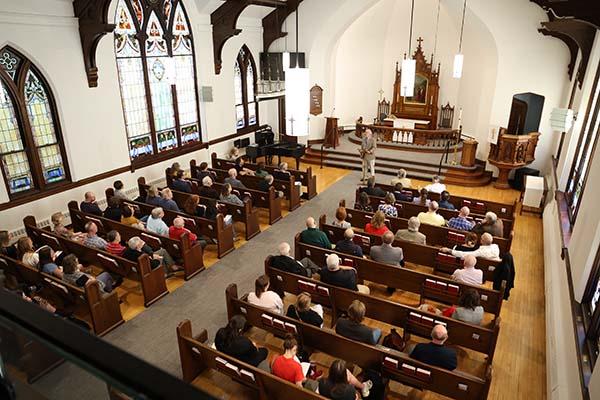
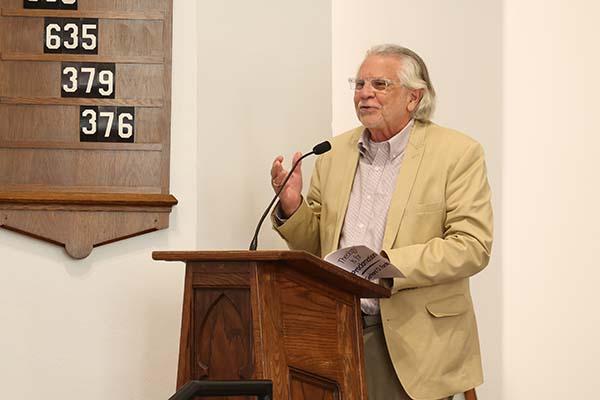
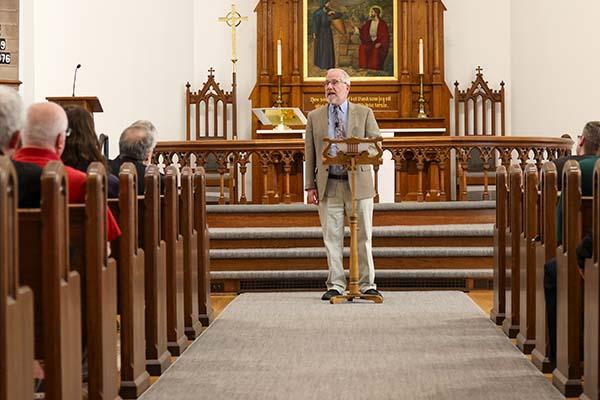
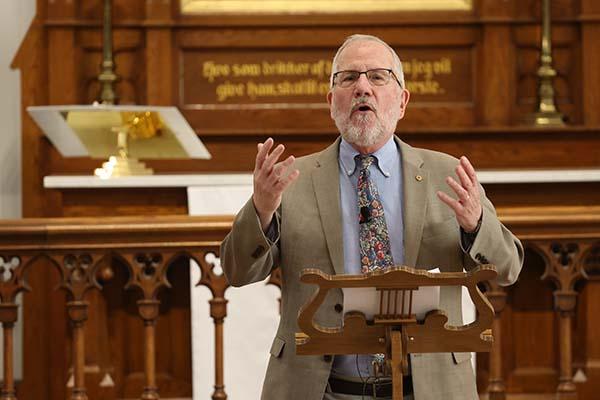
 The 2026 Lutheran Quarterly Lecture: “Gerhard Forde, a Practical Theologian Par Excellence,” was given by Timothy Wengert at Grandview University.
Important details:
Friday, April 17 | 3:00 PM
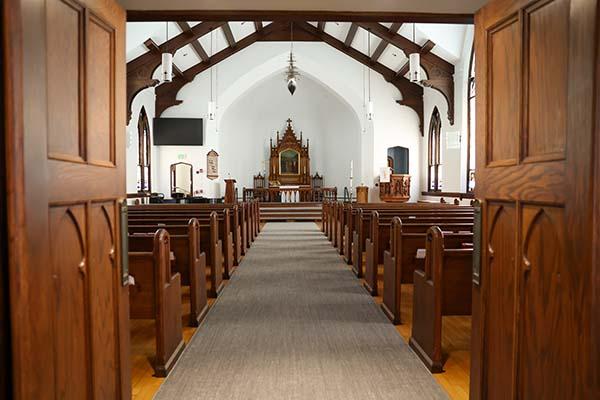
Luther Memorial Church, Grand View University
1201 Grandview Ave, Des Moines, IA 50316
A recording of the lecture is available, please see below.
Bud Thompson of Lutheran Quarterly provided the following introduction at the event.
It is my honor to introduce the second Lutheran Quarterly Lecture, “Gerhard Forde (1927-2005): Practical Theologian Par Excellence,” by Timothy J. Wengert.
Tim’s lecture inaugurates Lutheran Quarterly’s year-long observance of the centennial of Gerhard’s birth. In the pages of the journal as well as on our website we will continue to draw attention to Gerhard’s contribution to Christian theology and the mission of the Christian church. We will for example feature Tim’s lecture as an essay in the pages of the journal. On the website we feature Gerhard’s own writings and sermons, including a complete bibliography of his published works.
By way of introduction to the present lecture, first a brief word about our lecturer and his work; then a brief word about man lectured upon and his work.
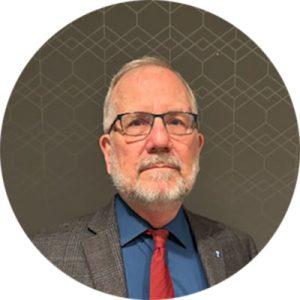
Timothy Wengert holds a doctorate in church history from Duke University. For seven years prior to joining the faculty of United Lutheran Seminary in Philadelphia, where he taught from 1989 to 2013, Tim was pastor to congregations of the church in Minnesota and Wisconsin. Over the years, he has written widely on the history of the Reformation and its significance for the church today, including many works on Luther and Melanchthon. Just to mention several of the notable titles from the long bibliography of his published works, he has co-edited, and translated portions, of The Book of Concord, published by Fortress in 2000. He has also edited The Annotated Luther and Dictionary of Luther and the Lutheran Traditions. In addition to his historical works he has written a number of volumes devoted to the cultivation of pastoral facility in the Lutheran tradition, Introducing Lutheran Hermeneutics, published by Fortress in 2019, The Augsburg Confession: Renewing Lutheran Faith and Practice, published in 2020 by Fortress, and just recently, with Robert Kolb, he has issued a study edition of the Augsburg Confession, published by Fortress in 2024. Currently, emeritus to the United Faculty, Tim lives in Hackettstown, NJ, with his wife, the Rev. Ingrid Faith Wengert, from where he continues to publish and travel for speaking engagements like this one.
It is beyond me to adequately acknowledge Gerhard Forde’s contribution to Christian theology. But if my own experience is any indication, then it may be said that Gerhard Forde provides an orientation to theology summed up in the Golden Rule of our faith, “do unto others as it has been done unto you.” As Gerhard puts it, “Systematic theology is reflection between yesterday’s and today’s proclamation. Having heard and been claimed by the Word of God, we reflect on how to say it again” (Theology is for Proclamation, 13). That orientation is reflected in every title he ever published—Where God Meets Man, Theology is for Proclamation, On Being a Theologian of the Cross, just to mention three books. As Gerhard has himself put it in an essay, published in the inaugural issue of the journal, and which to my mind provides the orientation to theology and the mission of the church, not only in these perilous times, but in all times, for all times are perilous, “Let us be radicals, not conservatives or liberals, . . . but radical preachers and practitioners of the gospel, justification by faith without the deeds of the law . . . pursue it to the radical depths already plumbed by St Paul . . . What is necessary, as Luther insisted, is an entirely different mode of thinking, an ad modum scripturae (in the manner of scripture), a fundamental change of the story. As early as his Lectures on Romans Luther remarks that the biblical story of the Exodus had been interpreted (tropologically) to mean the exodus from vice to virtue. Now, however, it must be interpreted as the exodus from virtue to the grace of God! Grace must be the story. It is grace that determines the relationship between God, the creature, creation, and its destiny. Grace is what God is all about. Grace is what God is up to. And a graced creation is what God aims to arrive at.” Well, that is actually a composite quote, but you get the idea, and so does Timothy J. Wengert in the lecture, which I am eager for you to hear.
Please watch the full event on YouTube HERE.